Most of our clients come to their first conversation with us prepared. They've done the research, spent time on Pinterest, saved rooms that made them stop scrolling, organized boards by space, by color, by feeling. Some have hundreds of images. And every single one of those boards tells us something true about that person.
We love seeing them.
But somewhere along the way, Pinterest became something it was never meant to be — a blueprint. Homeowners look at a finished room in a California hillside home and assume that, with the right furniture and a weekend, they could recreate it. And then the sofa arrives, the rug goes down, and something feels off. The proportions are wrong, or the light is different, or the whole thing just doesn't have that quality. It looked so simple in the photo.
That gap between the image and the reality is where professional design lives.
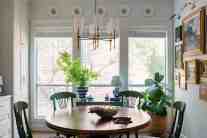
Pinterest is a visual language. When you save a room, you're telling us something about the feeling you want to live inside — not necessarily the exact tile or the specific chandelier. You might save ten rooms that have almost nothing in common on the surface, but every one of them has warm light and a sense of quiet. That's the thread. That's what we're looking for.
This is incredibly useful information. It shortens conversations, helps us understand your instincts, and gives us a reference point we can keep coming back to throughout the project. We genuinely encourage clients to keep saving things, even things they aren't sure about.
But inspiration is not a plan. And confusing the two is one of the most common reasons a beautifully budgeted project ends up feeling like it belongs to someone else.
The sectional in that image might be nine feet wide. Or it might be six. Without knowing the room's dimensions and the camera lens used to shoot it, there's no way to know. Professional designers work in measurements — we evaluate every piece in relation to the room, the traffic flow, the sightlines, and the other pieces around it.
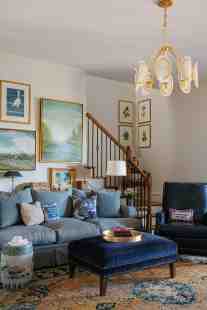
That same white kitchen with the marble island looks entirely different in a home with eight-foot ceilings, one small window, and a north-facing exposure. Pinterest doesn't know your ceiling height, where your windows land, or how light moves through your rooms from morning to evening. A designer does, because we spend time in your space before we ever specify a single thing.

A single Pinterest photo might contain custom millwork built by an artisan in Italy, vintage lighting that hasn't been available for fifteen years, fabric sourced from a showroom only accessible to the trade, and a piece of original art that is simply not for sale. The image is a snapshot of one moment in a room with its own history. Designers know how to translate a feeling into what's actually achievable — and available — for your home and your project.
The most important thing Pinterest doesn't know is you. It doesn't know that you host your entire extended family every Thanksgiving, or that your dogs claim the sofa, or that your kids do homework at the kitchen island. It doesn't know what you've already spent, what you want to save, or what trade-offs matter to you. That context is everything. A room designed around how you actually live, with a budget that reflects your real priorities, will always feel more right than a Pinterest recreation.
A professional design plan is a working document, not a mood board. It includes space planning and furniture layouts scaled to your actual room, material selections that are evaluated together rather than individually, a lighting plan, a budget strategy with real numbers, a procurement timeline, and an installation sequence. It accounts for lead times, for things that need to be custom-built, for what ships from overseas and what we can source locally.
More than that, it accounts for how the spaces relate to each other — so that your living room, your dining room, and your kitchen feel like they belong in the same home, not like three different projects assembled at three different times.

We're not suggesting you stop saving. We're suggesting you bring those boards to a conversation instead of a shopping cart.
The images you've collected over months, or years, represent something real about your taste and your instincts. That's valuable starting material. Our job is to understand what's underneath those images — the quality of light, the sense of order, the feeling of restraint or warmth or texture — and translate that into a home that is specifically yours.
Not a version of someone else's home. Yours.
ML Interiors Group is a full-service luxury residential interior design firm based in Addison, Texas. We work with clients who are ready to move beyond inspiration and into a design process that's built around how they actually live.
Every project begins with a conversation about your home, your family, your routines, and what you want your space to feel like on an ordinary Tuesday. From there, we handle everything; concept through white-glove installation.
If you've been collecting inspiration for a while and you're ready to turn it into something real, we'd love to talk. Contact us today!
If you enjoyed reading this, you may also like our other post The Power of a Mood Board.
The best homes aren't designed around a checklist of rooms or the latest design trend. They're…
View Post
You have a career to manage. A family to care for. Travel, commitments, responsibilities—and a…
View Post
Walk into enough beautifully designed homes and you start to notice something: the most memorable…
View Post
A beautifully designed living room should do more than look good. It should support the way you…
View Post